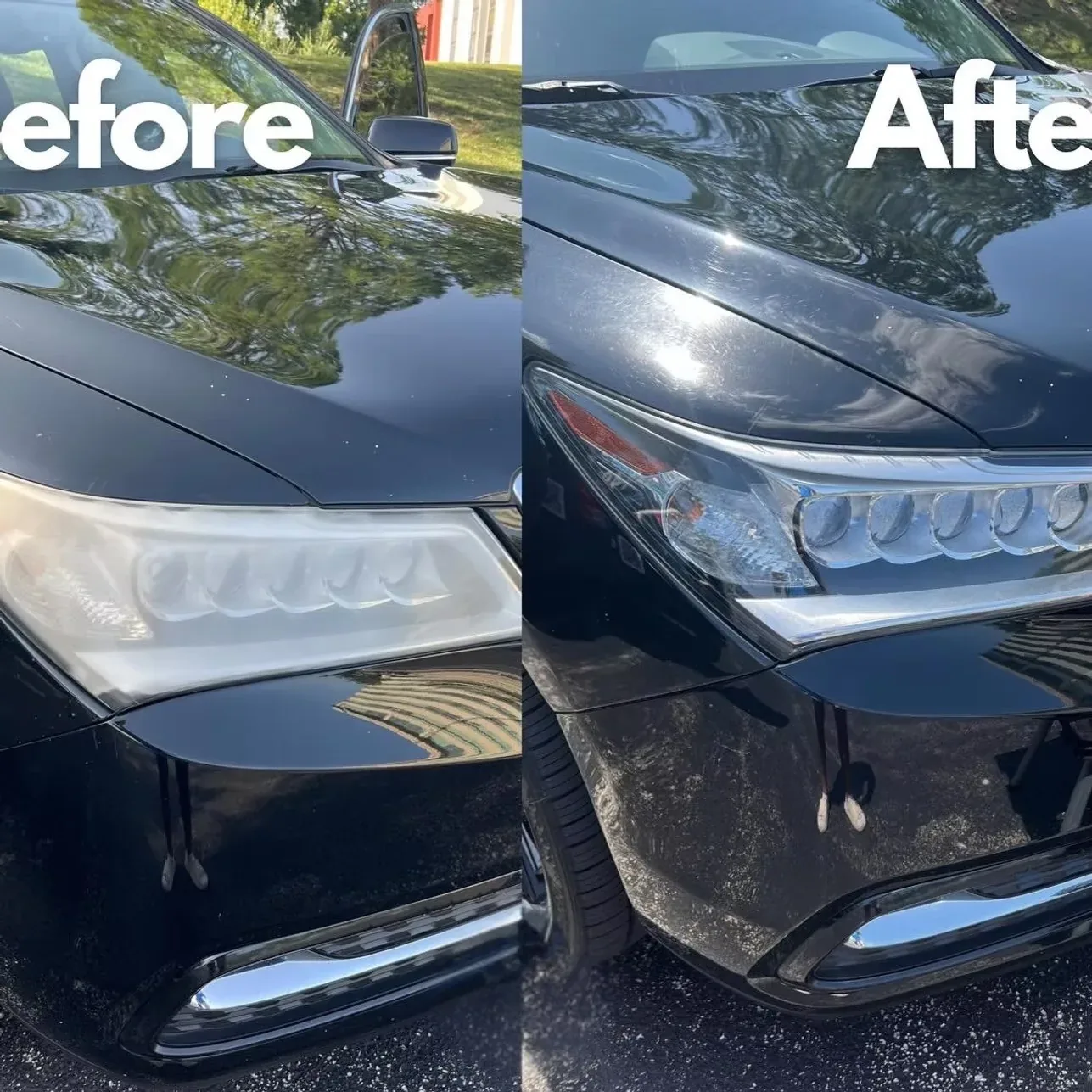
Cloudy headlights reduce road illumination by up to 80% on Ontario night roads. It is a safety issue as much as a cosmetic one - and professional restoration costs far less than replacement.
Why Headlights Turn Yellow and Cloudy
Modern headlight lenses are made from polycarbonate plastic rather than the older glass designs. Polycarbonate is lighter and more impact-resistant, but it oxidizes when exposed to UV radiation over time. The factory UV-protective coating on headlight lenses typically starts failing after three to five years, especially on vehicles parked outdoors. Once that protective layer breaks down, UV radiation attacks the polycarbonate itself, turning it yellow, hazy, and opaque. Ontario winters accelerate this process - road salt, freeze-thaw cycling, and the reflective UV exposure from snow-covered roads create a uniquely harsh environment for headlight lenses.
The Safety Consequence
This is not just a cosmetic concern. Studies from the American Automobile Association and the Insurance Institute for Highway Safety have consistently found that heavily oxidized headlights can reduce forward illumination by 60 to 80% compared to new lenses. On a rural road in Ontario - the 404 north of Newmarket, for example, or the side roads through King City and Oak Ridges - reduced headlight output creates a genuine night-driving hazard. Reaction time to a deer or stopped vehicle on a dark rural road is directly correlated to how far your headlights illuminate.
The Professional Restoration Process
Professional headlight restoration is a multi-stage wet-sanding and polishing process:
- Stage 1 - Coarse sanding (400-600 grit): Removes the oxidized outer layer and heavy yellowing
- Stage 2 - Medium sanding (800-1500 grit): Removes the scratches from the coarse stage and begins refining the surface
- Stage 3 - Fine sanding (2000-3000 grit): Brings the lens to a near-clear state
- Stage 4 - Compound polish: Machine polishing restores optical clarity
- Stage 5 - UV sealant application: A UV-protective topcoat is applied to prevent re-oxidation
The UV sealant applied in the final stage is what determines how long the restoration lasts. A spray-on sealant from a consumer kit may last six to twelve months. A professional-grade UV coating properly applied and cured lasts two to three years or longer.
Restoration vs Replacement
New OEM headlight assemblies for most vehicles cost between $200 and $600 per side - and often more for luxury or European brands. Professional headlight restoration costs a fraction of that and produces results that are functionally equivalent to new in terms of light output. For most vehicles in moderate to heavy oxidation condition, restoration is the clear economic and practical choice.
The DIY Reality Check
Consumer headlight restoration kits exist, and some produce decent short-term results. The limitation is the UV sealant - most kit sealants are thin and begin re-oxidizing within six months in Ontario's UV environment. The wet-sanding stages also require some experience to execute evenly without creating flat spots on the curved lens surface. For a lasting result, professional restoration with a proper UV topcoat is worth the investment.
Royal Mobile Car Detailing offers headlight restoration as a standalone service or as an add-on to any detail package. We come to your driveway in Newmarket, Aurora, Vaughan, Markham, and Stouffville. Book your headlight restoration online.